
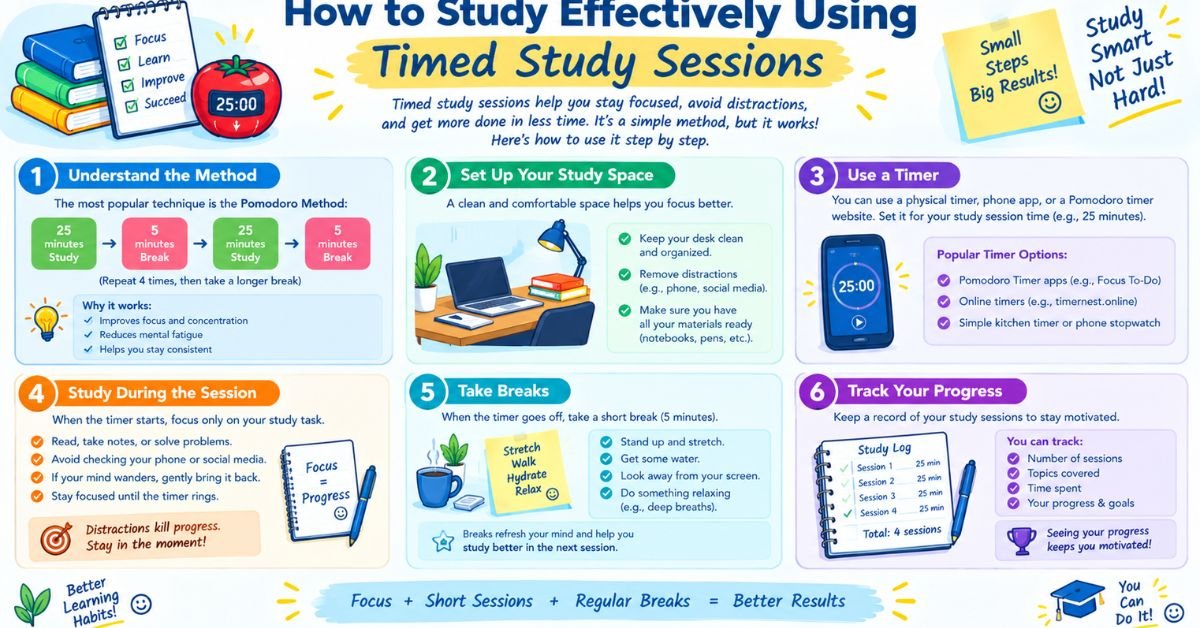
Studying for an exam can feel overwhelming when the task is too large or your breaks are unplanned. Timed study sessions give each block a clear beginning and end, helping you decide what to work on and when to pause. The best schedule is one you can follow consistently and adjust as your workload changes.
What is a timed study session?
A timed study session is a planned period dedicated to one learning task, followed by a short break or a change of activity. You might review notes for 20 minutes, solve practice questions for 30 minutes, or revise flashcards for 10 minutes. A timer provides structure, but active learning recalling, explaining, and practising the material is what makes the session useful.
How to plan a focused study session
- Choose one clear goal. For example, summarise a topic, solve a set of problems, or test yourself on a chapter.
- Pick a realistic duration. Start with 20–25 minutes if you are easily distracted, or choose a longer block for a task that needs sustained attention.
- Prepare your materials. Open the notes and resources you need, and silence non-essential notifications.
- Start the timer and study actively. Test yourself, write a summary from memory, or work through practice questions instead of only rereading.
- Take a short break. Stand, stretch, drink water, or rest your eyes before starting the next block.
- Review your progress. Note what you completed and choose the next small goal.
Choose a study interval that fits the task
There is no single ideal duration for every learner. Try a shorter block when beginning a difficult task or returning after a distraction. Longer blocks may suit essay writing, practice exams, or topics that require deeper concentration. If you need help structuring focused blocks, try the Study Timer. You can also use the Pomodoro Focus Timer for a familiar work-and-break rhythm.
Study techniques that make the time count
Use active recall
Close your notes and explain the concept in your own words, answer practice questions, or write down what you remember. Then check what you missed.
Space out revision
Instead of trying to learn everything in one sitting, revisit important material across multiple days. Short, repeated reviews can help you identify what still needs attention.
Mix practice with review
Alternate between understanding a concept and applying it. For example, read a worked example, then attempt a similar problem without looking at the solution.
Keep breaks restorative
Use breaks to move, hydrate, or rest. If you are tired, take a longer break rather than treating the timer as a reason to ignore fatigue.
Common study-timer mistakes
- Setting a block that is so long you keep postponing the start.
- Switching between several subjects or apps during one focused interval.
- Measuring success only by time spent instead of what you learned.
- Skipping breaks or feeling guilty when you need to adjust your plan.
Frequently asked questions
How long should I study before taking a break?
Start with a manageable interval, such as 20–25 minutes, then adjust based on the task and your concentration. The schedule should support learning, not make you rush.
Should I use a timer when preparing for exams?
A timer can help you allocate time to revision topics and practise under exam-like limits. Leave some time to review mistakes and revisit weak areas.
What if I lose focus before the timer ends?
Write down the distraction if needed, gently return to the task, and consider using a shorter interval next time. Focus improves with practice and realistic planning.
Build a routine you can repeat
Choose one learning goal, work for a realistic interval, and review what you learned before moving on. Open the Study Timer to plan your next session, explore the Countdown Timer for a custom time limit, or visit the TimerNest to find the timer that fits your routine.